Honda CR-V AWD vs. FWD: Do You Need All-Wheel Drive in Utah?
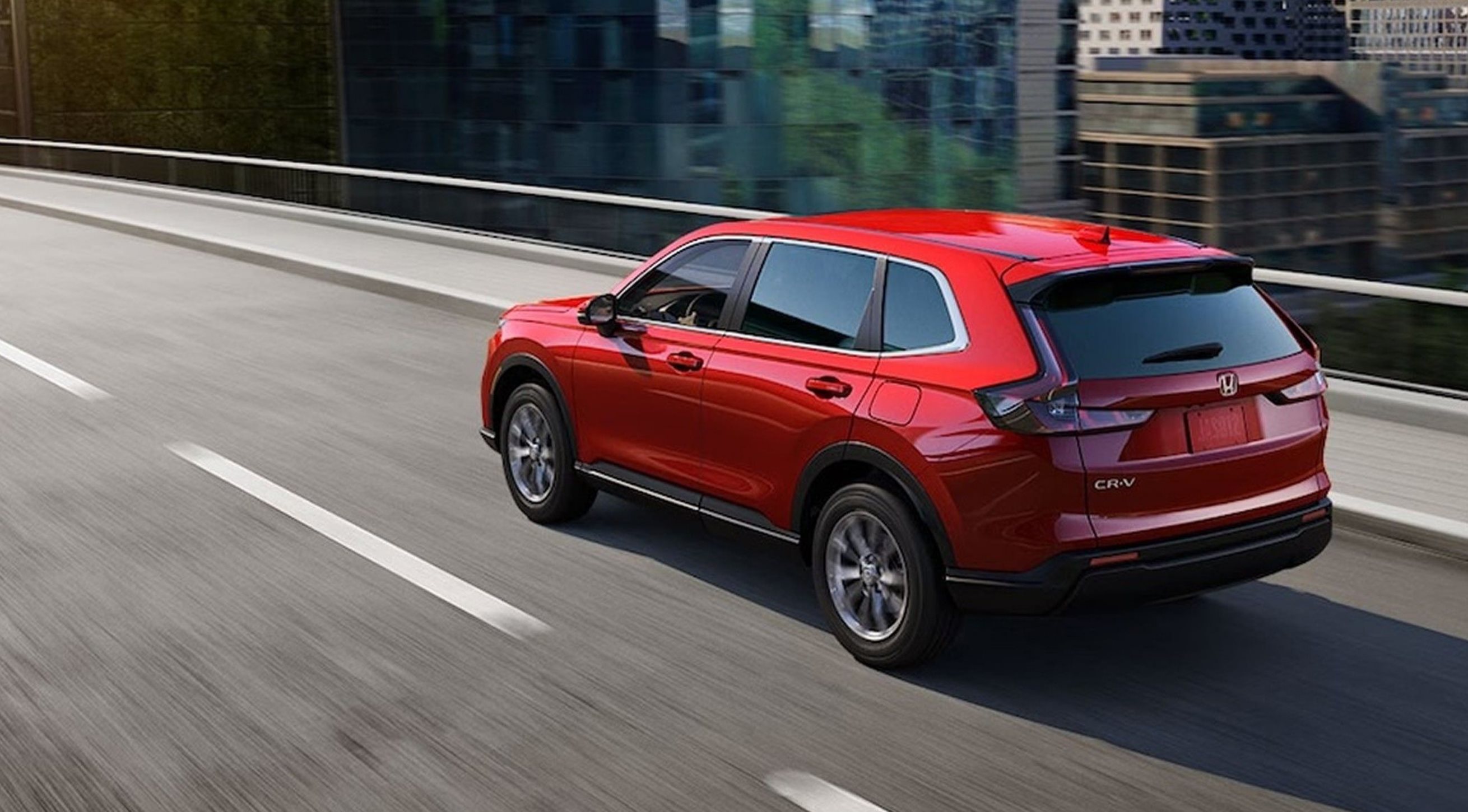
If you are shopping for a Honda CR-V in Utah, there is a good chance you have asked one question:
Do I actually need all-wheel drive?
The short answer is no—not every Utah driver needs AWD.
If most of your driving happens on maintained roads around Sandy, Draper, South Jordan, Riverton, or Salt Lake City, a front-wheel-drive CR-V with the right tires can be a practical, efficient choice.
But if winter means regular trips through Parleys Canyon, ski days in the Cottonwoods, drives to Park City, steep neighborhood roads, or commuting before the plows arrive, AWD is probably worth it.
That is really what the decision comes down to: where, when, and how you drive.
What Is the Difference Between CR-V FWD and AWD?
A front-wheel-drive CR-V sends driving power to the front wheels.
With Honda's available Real Time AWD with Intelligent Control System™, the CR-V can distribute power to the rear wheels when additional traction is useful. Honda says the system can respond proactively during acceleration and hill climbing and react to changing traction conditions.
That extra capability can be especially useful on:
- Snow-covered roads
- Slushy intersections
- Steep hills
- Wet pavement
- Canyon roads
- Gravel or loose surfaces
- Roads that have not yet been plowed
AWD works automatically, so there is no need to manually switch between two-wheel and all-wheel drive.
Quick Answer: Which One Should Utah Drivers Buy?
Here is an easy way to decide.
FWD is probably enough if you:
- Mostly drive on maintained Wasatch Front roads
- Commute primarily on I-15 and city streets
- Can avoid driving during major snowstorms
- Do not regularly travel into the mountains during winter
- Want to maximize fuel economy
- Plan to use high-quality winter or severe-snow-rated tires when conditions call for them
AWD is probably worth it if you:
- Regularly ski or snowboard
- Drive Big or Little Cottonwood Canyon in winter
- Frequently travel through Parleys Canyon or to Park City
- Live on a steep road or driveway
- Leave for work before roads are fully plowed
- Frequently drive during snowstorms
- Want additional traction when Utah weather changes unexpectedly
For many Salt Lake Valley commuters, FWD can work just fine.
For frequent mountain drivers? We would choose AWD.
Why AWD Makes Sense for Utah Canyon Driving
This is where the AWD argument gets much stronger.
Utah's mountain roads can change dramatically over a relatively short drive. Roads may be dry in the Salt Lake Valley while snow is falling heavily at higher elevations.
UDOT can activate traction requirements during severe winter conditions on routes including Big and Little Cottonwood Canyons, I-80 through Parleys Canyon, and other mountain corridors.
Under UDOT's posted traction requirements, AWD and 4WD vehicles can meet certain restrictions with qualifying M+S or 3PMSF tires, while two-wheel-drive vehicles can face stricter tire or traction-device requirements depending on the restriction level. The Cottonwood Canyons can also operate under the stricter Class 3 traction designation.
So if Alta, Snowbird, Brighton, Solitude, or Park City are part of your normal winter routine, AWD can make owning a CR-V more convenient.
It still does not mean you can ignore your tires.
Does AWD Mean You Don't Need Good Winter Tires?
No.
This may be the most important thing to understand when comparing AWD and FWD.
AWD can improve your ability to put power down when traction is limited, but it does not make snow and ice disappear.
Honda itself advises AWD drivers to use the same care when accelerating, steering, and braking that they would use in a two-wheel-drive vehicle.
Your tires are responsible for the actual contact between your CR-V and the road.
For Utah winter driving, pay attention to tire tread and winter ratings—especially if you regularly travel into the mountains.
UDOT's current Cottonwood Canyon guidance distinguishes between M+S tires and tires carrying the 3-Peak Mountain Snowflake (3PMSF) symbol, with stricter requirements applying to two-wheel-drive vehicles under certain traction restrictions.
In other words: AWD + bad tires is not a winter-driving cheat code.
Good tires still matter.
Does the AWD CR-V Sit Higher Than the FWD CR-V?
Slightly.
For the 2026 Honda CR-V, Honda lists approximately:
- 7.8 inches of ground clearance for 2WD models
- 8.2 inches of ground clearance for AWD models
That is about four-tenths of an inch of additional clearance with AWD.
It is not a huge difference, but extra clearance can be useful when driving through fresh snow, getting out of a snowy driveway, or navigating piles of snow left behind by a plow.
The CR-V is still a compact crossover—not a dedicated deep-snow or off-road vehicle—but its ground clearance is practical for normal Utah driving.
Does FWD Get Better Gas Mileage?
Generally, yes.
One advantage of choosing FWD is efficiency.
Using the 2026 CR-V as an example, Honda lists the turbocharged CR-V at an EPA-estimated 30 mpg combined with 2WD versus 29 mpg combined with AWD.
The difference is larger on certain CR-V Hybrid trims. The Sport Hybrid and Sport-L Hybrid are rated at 40 mpg combined with 2WD and 37 mpg combined with AWD. Ratings vary by trim and configuration.
So if most of your driving happens on plowed city streets and mountain trips are rare, choosing FWD can give you the CR-V's everyday practicality while prioritizing fuel economy.
What About Snow Mode?
Another reason you should not automatically rule out a FWD CR-V is Snow mode.
The current CR-V lineup includes a Snow drive mode designed to help the vehicle respond more smoothly when roads become slippery. Honda describes Snow mode as helping with acceleration and deceleration in icy conditions.
Snow mode and AWD are not the same thing.
Snow mode adjusts how the vehicle responds to driver inputs, while AWD can send power to the rear wheels for additional traction.
When available together, they complement each other.
But having Snow mode does not suddenly turn a FWD CR-V into an AWD vehicle.
Is AWD Better in Rain Too?
AWD is not only useful when it snows.
Utah drivers can also encounter heavy rain, standing water, slush, gravel roads, and rapidly changing surfaces.
Honda's Real Time AWD system monitors driving conditions and can adjust front-to-rear power distribution to improve traction and stability. Honda also notes that the system can proactively send power rearward during acceleration and hill climbing.
For drivers who spend a lot of time traveling throughout Utah instead of staying primarily on city roads, that added capability may be worthwhile year-round.
Which 2026 Honda CR-V Models Have AWD?
Honda offers Real Time AWD across the 2026 CR-V lineup.
AWD is standard on the TrailSport Hybrid and Sport Touring Hybrid and is available on the other CR-V trims.
That means Utah shoppers have flexibility.
You do not necessarily have to move all the way to the highest trim just to get AWD.
You can choose your preferred combination of gas or hybrid power, features, price point, and drivetrain.
What About the CR-V TrailSport Hybrid?
For Utah drivers who spend a lot of weekends outside, the 2026 CR-V TrailSport Hybrid is especially interesting.
It comes standard with AWD and adds all-terrain tires along with its TrailSport-focused equipment.
That makes it appealing for someone whose CR-V may spend Monday through Friday commuting around Sandy but Saturday morning heading toward a trailhead, campsite, ski area, or mountain road.
Just remember that all-terrain does not automatically mean winter tire. Check the actual markings and condition of the tires before assuming they meet a particular UDOT winter restriction.
Is FWD Good Enough for Driving Around Salt Lake City?
For many people, yes.
If your normal winter day looks like:
Sandy → I-15 → Salt Lake City → I-15 → Home
You probably do not need AWD simply because you live in Utah.
Major roads along the Wasatch Front are typically the priority for snow removal, and drivers who have flexibility to avoid the worst part of a storm may be perfectly comfortable with FWD and appropriate tires.
Choosing AWD becomes much easier to justify when you add elevation, steep roads, frequent storm driving, or mountain recreation to the equation.
Think about your worst normal drive, not just your easiest one.
If that drive regularly involves snow-covered canyon roads, AWD begins to make a lot more sense.
AWD vs. FWD Honda CR-V: Utah Comparison
| Driving Scenario / Feature | FWD CR-V | AWD CR-V |
|---|---|---|
| Salt Lake Valley commuting | Great fit | Great fit |
| Maintained city roads | Great fit | Great fit |
| Fuel economy priority | Advantage | Slight tradeoff |
| Snowy neighborhood roads | Capable with proper tires | Advantage |
| Steep snowy hills | Less ideal | Advantage |
| Frequent canyon driving | Possible with proper equipment | Better fit |
| Ski resort trips | Occasional | Better fit |
| Changing road conditions | Good | Advantage |
| Ground clearance | Approx. 7.8 in. | Approx. 8.2 in. |
| Utah traction-law flexibility | More tire/device dependent | Advantage |
So, Do You Really Need AWD in Utah?
No—but plenty of Utah drivers will be happier having it.
If you live and work primarily in the Salt Lake Valley, stay on maintained roads, use appropriate tires, and have the flexibility to avoid the worst winter storms, a FWD Honda CR-V can make plenty of sense.
You may also benefit from better fuel economy.
But if you regularly drive into Utah's mountains, commute through storms, live somewhere steep, travel before snowplows arrive, or spend winter weekends chasing powder, AWD is the CR-V we would recommend.
he important part is not buying AWD simply because someone says, "You live in Utah, so you need it."
Buy it because your driving habits actually justify it.
Honda CR-V AWD vs. FWD FAQs
Q: Is AWD necessary in Utah?
Not for every driver. Utah drivers who primarily use maintained city and freeway routes can often do well with FWD and appropriate tires. AWD becomes more useful for mountain travel, steep roads, unplowed streets, and frequent winter driving.
Q: Is a FWD Honda CR-V good in snow?
A FWD CR-V can handle normal winter driving when equipped with appropriate tires and driven according to conditions. However, AWD provides an advantage when accelerating on slippery surfaces or climbing snowy hills.
Q: Is AWD better than FWD for driving to Utah ski resorts?
For frequent ski trips, AWD is generally the better choice. Utah's mountain roads can experience rapidly changing conditions and traction restrictions. Drivers should always check current UDOT requirements before traveling.
Q: Does AWD help you stop faster in snow?
Do not rely on AWD to shorten stopping distances. AWD primarily helps with traction and power delivery. Tire grip, speed, following distance, and road conditions remain critical when braking on snow and ice.
Q: Does the Honda CR-V have Snow mode?
Yes. Current 2026 Honda CR-V models include Snow mode as part of their selectable drive-mode systems. Features should always be confirmed on the specific vehicle you are considering.
Q: Does the 2026 CR-V come standard with AWD?
Not on every trim. AWD is available throughout the lineup and comes standard on the 2026 TrailSport Hybrid and Sport Touring Hybrid.
Q: Is AWD worth the lower fuel economy?
That depends on your driving habits. Someone who regularly travels to Park City or the Cottonwood Canyons may value the added traction more than the fuel-economy difference. Someone who almost exclusively drives around the Salt Lake Valley may prefer FWD's efficiency.
Find the Right Honda CR-V for Your Utah Driving
Still deciding between FWD and AWD?
Sometimes the easiest way to choose is to compare them in person.
Visit Stockton 12 Honda in Sandy, Utah to explore available Honda CR-V and CR-V Hybrid models and compare trims, drivetrains, features, and fuel-economy ratings.
Whether your CR-V is headed down I-15 every morning or up a canyon every weekend, our team can help you choose the drivetrain that actually fits the way you drive.
Vehicle features, specifications, fuel-economy ratings, drivetrain availability, tires, and equipment can vary by model year, trim, and configuration. Winter driving capability also depends on tire condition, weather, road conditions, speed, and driver behavior. Check the exact vehicle specifications and current UDOT requirements before traveling in severe winter conditions.